

Nine pages of dense text became two pages anyone can follow.
Project Overview- A legal office managing immigration cases required staff to file Freedom of Information Act requests across three federal agencies, USCIS, ICE, and CBP. The existing process documentation was nine pages of dense typed instructions, creating unnecessary complexity for a repeatable, learnable task.
Design Problem- Length and density weren't the only issues. The documentation treated three distinct agency workflows as one undifferentiated process, requiring staff to read, interpret, and remember which steps applied to which agency, introducing unnecessary risk of error.
Goal- Reduce cognitive load, eliminate error points, and create a reference document staff could use while doing the task, not one they had to memorize beforehand.
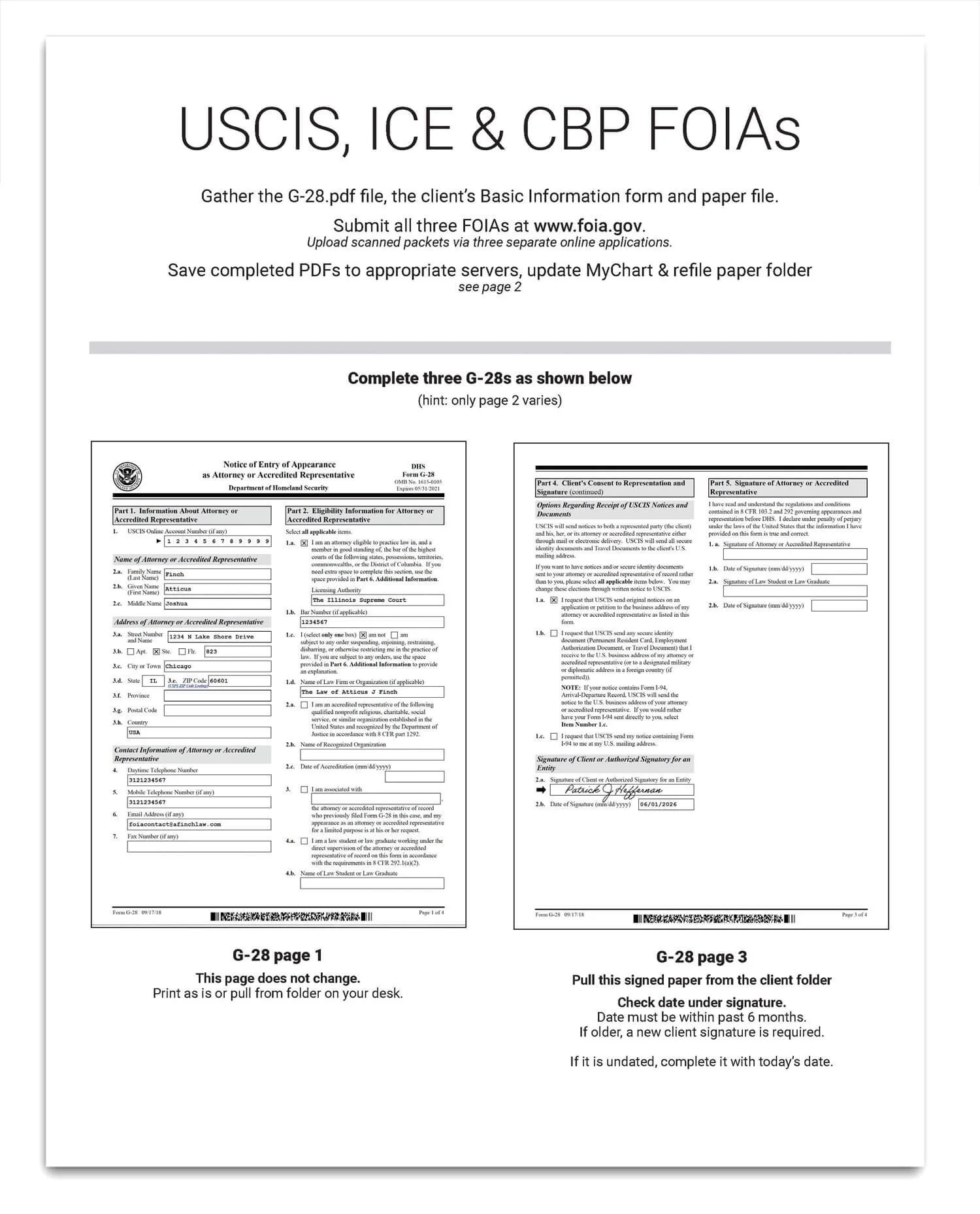
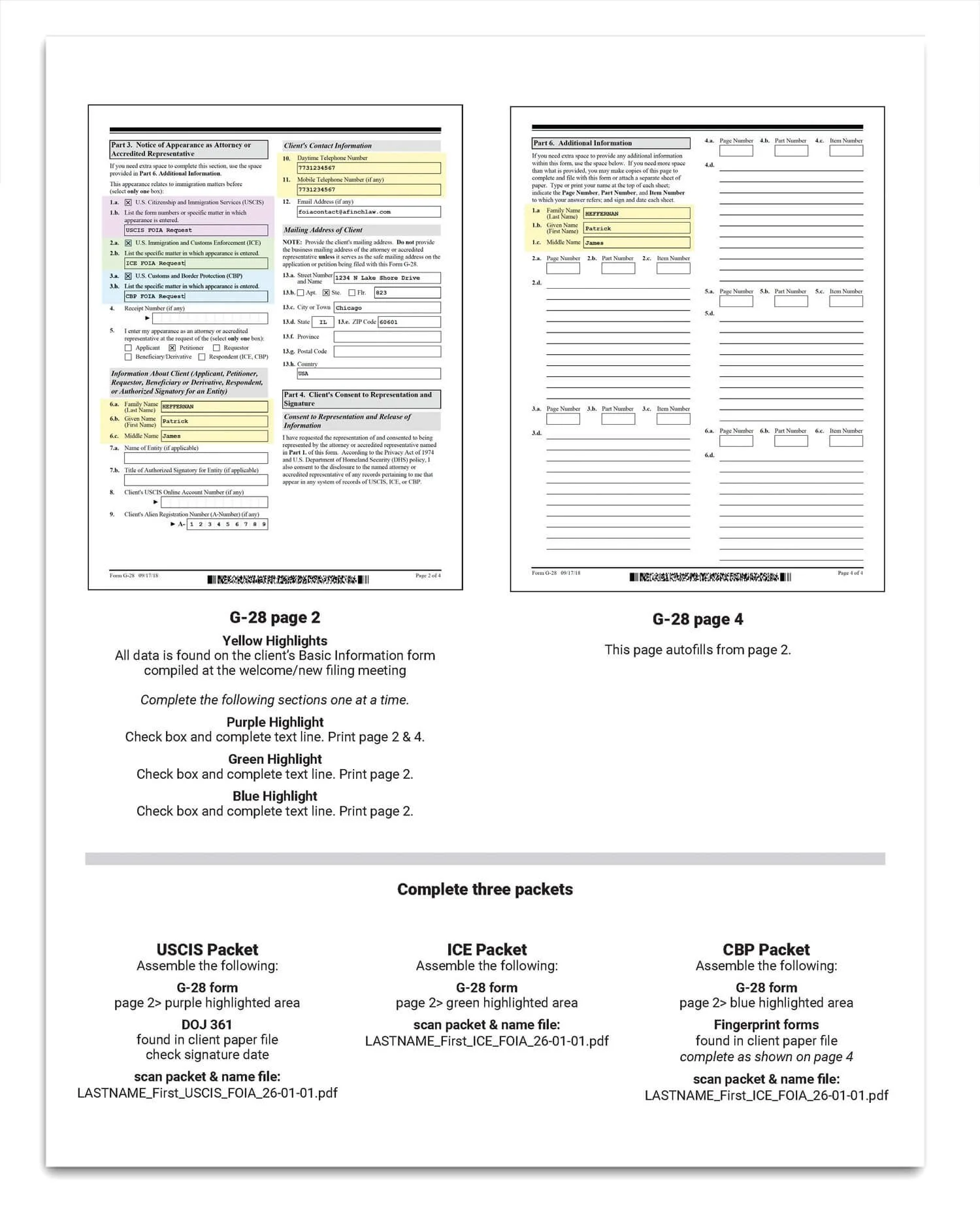
Result- A two-page visual job aid using color-coded navigation (purple, green, and blue) to distinguish the three agency packets at a glance. Annotated real form images replaced written descriptions. File naming conventions were embedded directly in the workflow. A process requiring nine pages of interpretation was reduced to two pages of action.
Role- Instructional Designer, Process Analyst, Visual Designer
Status- Proprietary, client confidential
Timeline- Rapid turnaround, single revision cycle
A job aid, not a document. Used at the desk, not filed in a drawer.
Color coding assigns each agency a dedicated visual lane, eliminating interpretation.
Annotated real form images replace written descriptions of form fields.
File naming conventions are embedded at the point of use. Page 4 autofills from Page 2, one entry, no retyping."